TOEFL iBT Paid Mock Test
If you are taking the TOEFL iBT for academic or career advancement, completing a full-length practice test is a highly effective preparation strategy. These comprehensive mock exams are carefully structured to mirror the exact format, pacing, and difficulty of the official TOEFL iBT Test by ETS . Rather than studying grammar and vocabulary out of context, engaging in a realistic test simulation enhances your practical language abilities and boosts your confidence for exam day.
Mock Test Price
185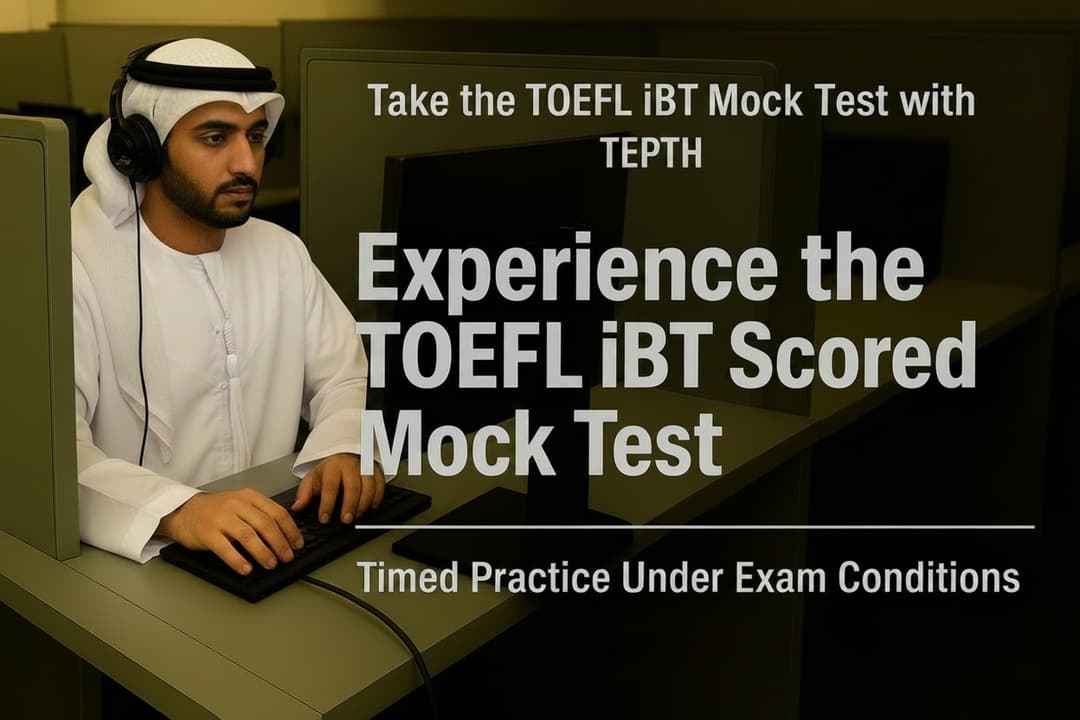
Benefits of Mock Tests for TOEFL iBT
If you are taking the TOEFL iBT for academic or career advancement, completing a full-length practice test is a highly effective preparation strategy. These comprehensive mock exams are carefully structured to mirror the exact format, pacing, and difficulty of the official TOEFL iBT Test by ETS . Rather than studying grammar and vocabulary out of context, engaging in a realistic test simulation enhances your practical language abilities and boosts your confidence for exam day.
Preparing for the Adaptive Nature of the Test
One of the most significant changes in the updated TOEFL is the adaptive system in sections such as Reading and Listening. This means the difficulty of later questions can change depending on how well a student performs earlier. Mock tests help students understand how this adaptive structure feels in practice. When students experience this format several times, they learn two important habits:
- maintaining accuracy from the beginning of the section
- staying calm even when questions suddenly become more challenging.
Without exposure to this format, many candidates become distracted when the difficulty shifts, which can affect performance in the remaining questions.
Training for the Faster Test Pace
The updated TOEFL has reduced the overall test time to around 90 minutes, which means the pace is noticeably faster. Students now have less time to process information and respond. Mock tests help students develop:
- faster reading comprehension
- quick note-taking during listening tasks
- immediate response planning for speaking questions.
When students practice under real time limits, they learn to prioritize essential information instead of overthinking every detail, which is crucial in the new format.
Practicing New Task Types
The latest TOEFL includes new task styles that focus more on practical communication. For example, some speaking and writing tasks resemble real academic interactions, such as responding to short prompts, summarizing information quickly, or composing brief written responses. Mock tests allow students to:
- become familiar with the structure of these newer tasks
- understand the level of detail expected in short responses
- avoid spending too much time planning answers.
Students who only study theory often struggle with these tasks because the challenge is not language difficulty but response efficiency.
Strengthening Rapid Speaking Responses
In the updated format, speaking tasks require students to organize and deliver ideas quickly. There is very little preparation time before recording begins. Through mock tests, students gradually develop the ability to:
- structure responses within seconds
- speak clearly without long pauses
- maintain logical organization even under pressure.
This kind of fluency rarely develops through classroom practice alone. Timed mock testing is what builds real speaking confidence.
Building Stamina for an Intensive Digital Test
Although the test is shorter, the updated TOEFL demands continuous concentration. Students must switch quickly between reading, listening, speaking, and writing without losing focus. Mock tests simulate this exact experience. After several full-length practices, students learn how to:
- manage mental fatigue
- maintain focus during rapid transitions between tasks
- remain consistent across all sections.
This mental endurance often separates students scoring mid-range marks from those achieving top scores.
Providing Realistic Score Feedback
Well-designed mock tests help both teachers and students evaluate readiness. They reveal patterns such as:
- strong listening but weak speaking organization
- slow reading speed under timed conditions
- unclear structure in short written responses.
Once these patterns are visible, preparation becomes far more focused and productive.